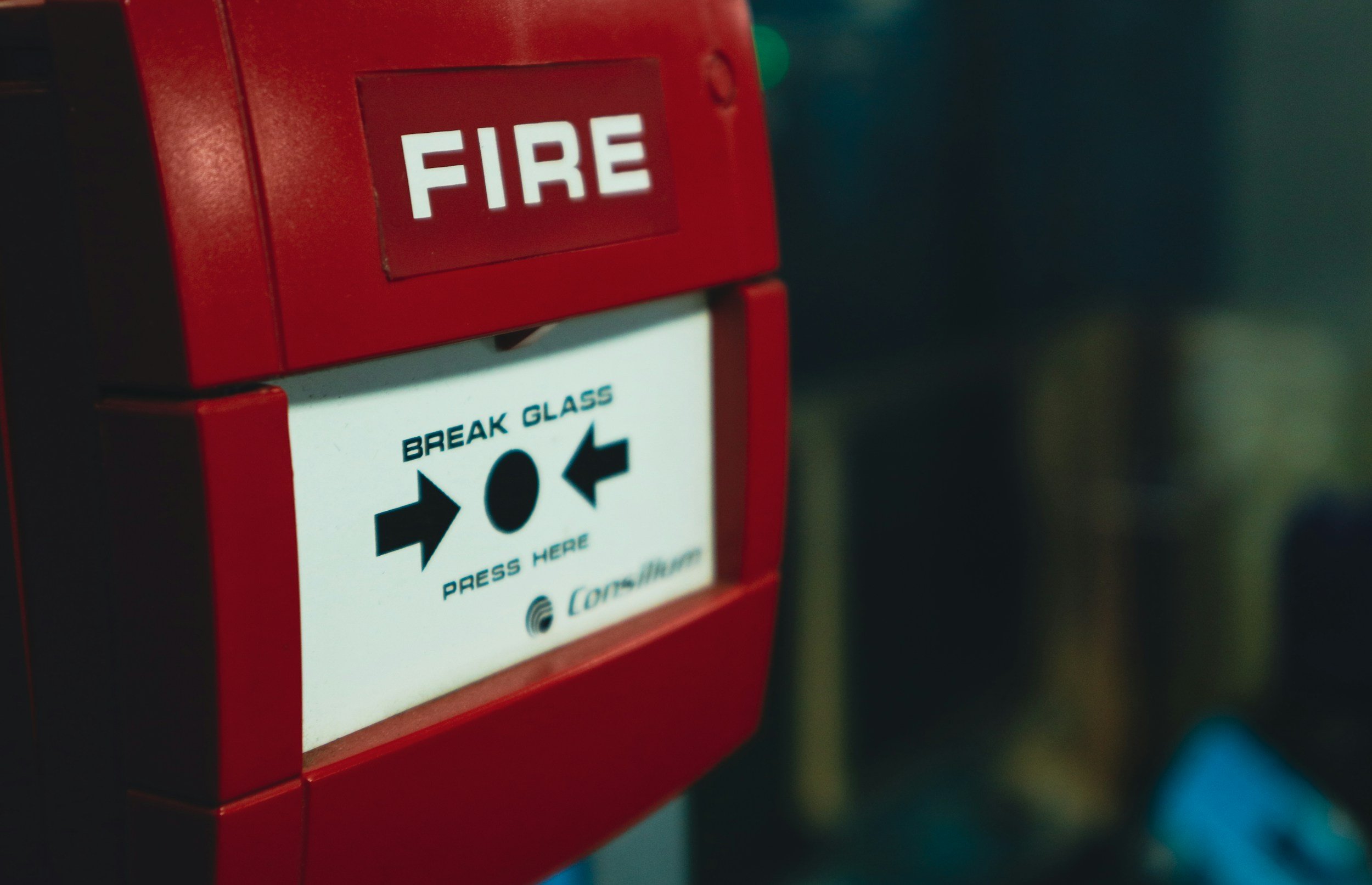
Ensuring your people, property, and business remain protected and compliant with the latest UK legislation.
As a business owner or property manager, fire safety is more than a "check-box" exercise—it is a fundamental legal duty. Whether you operate a single-site office, a retail chain, or a complex residential block, our consultancy provides the expert oversight needed to navigate the Regulatory Reform (Fire Safety) Order 2005 and the Fire Safety Act 2021.
Fire Safety & Regulatory Compliance
Fire Safety & Regulatory Compliance
Our Core Fire Safety Services
Fire Risk Assessments (FRA)
The foundation of your fire safety strategy. We conduct comprehensive assessments to identify hazards and provide a clear, prioritized action plan.
Suitability: All commercial, industrial, and multi-occupied residential premises.
What we do: Evaluate ignition sources, escape routes, and fire detection systems to ensure you meet your "Responsible Person" obligations.
Fire Extinguisher Servicing & Training
Having an extinguisher is one thing; knowing how to use it—and ensuring it works—is another.
Servicing: Annual maintenance to BS 5306-3 standards.
Staff Training: Hands-on sessions covering the different types of fire (A, B, C, D, and F) and the "PASS" technique for safe operation.
Fire Door Inspections
Fire doors are life-saving assets, but only if they function correctly. Since the Fire Safety (England) Regulations 2022, regular inspections are no longer optional—they are a mandate.
Detailed Surveys: We check gaps, seals, hinges, and self-closing devices.
Compliance Reports: Full documentation for your safety records, identifying any required repairs to maintain fire compartmentation.
Fire Warden & Fire Marshal Training
Empower your team to lead during a crisis. We provide certified training tailored to your specific building layout and risks.
Emergency Procedures: Evacuation management and sweep protocols.
Prevention: Training your wardens to spot hazards before they become incidents.
Key definitions and legislation
The "Responsible Person" is the individual, employer, or entity that has control over a premises; they carry the ultimate legal accountability for ensuring fire safety duties are met to protect life and property.
the Responsible Person
The "Principal Accountable Person" is the individual or entity who owns or has a legal obligation to repair the structure and exterior of a higher-risk building; they hold the primary duty to coordinate safety efforts across the entire building and act as the lead point of contact for the Building Safety Regulator.
The Principal Accountable Person
The Fire Safety Act 2021: What has changed?
The Fire Safety Act 2021 recently updated the Regulatory Reform (Fire Safety) Order 2005, clarifying exactly what needs to be included in your Fire Risk Assessment (FRA). If you manage multi-occupied residential buildings or commercial spaces with domestic dwellings, these changes apply to you directly.
Key Legislative Shifts:
External Walls & Cladding: It is now explicitly clear that the building’s structure, external walls (including cladding, balconies, and windows), and any common parts are within the scope of the Fire Safety Order. These must now be assessed in your FRA.
Flat Entrance Doors: All doors between domestic premises and common parts (such as flat front doors) are now legally part of the communal fire safety assessment.
Mandatory Recording: As of October 2023, all businesses—regardless of size or number of employees—must now record their Fire Risk Assessment in full. The "five-employee rule" for written records no longer exists.
Enhanced Cooperation: If your building has multiple "Responsible Persons" (e.g., several business tenants or a landlord and a tenant), you are now legally required to share information with each other and keep a record of that cooperation.
The Regulatory Reform (Fire Safety) Order 2005 (RRFSO)
Your Statutory Duties Explained
The RRFSO is the primary piece of legislation governing fire safety in England and Wales. It mandates that every business and "Responsible Person" must proactively manage fire risk. Under this Order, you have several non-negotiable legal duties:
Duty to Protect: You must take "general fire precautions" to ensure the safety of your employees and any "relevant persons" (visitors, customers, or neighbors) who might be affected by a fire on your premises.
The Fire Risk Assessment: You are legally required to carry out a "suitable and sufficient" assessment of the risks to which relevant persons are exposed.
Maintenance of Facilities: Any equipment provided for fire safety (alarms, extinguishers, emergency lighting, fire doors) must be maintained in an efficient state, in efficient working order, and in good repair.
Competent Assistance: You must appoint one or more "competent persons" to assist you in undertaking the preventive and protective measures required by the Order.
The Building Safety Act 2022: Your Responsibilities
For Owners of "Higher-Risk Buildings" (HRBs)
The Building Safety Act has introduced the most significant changes to property law in decades. If you own or manage a building that is at least 18 metres tall (or 7 storeys) and contains at least two residential units, you have specific legal duties.
Key Roles: Accountable Person (AP) & Principal Accountable Person (PAP)
If you fall into this category, you cannot delegate your legal liability. Your core responsibilities include:
The Safety Case Report: You must demonstrate to the Building Safety Regulator (BSR) that you are actively managing fire and structural risks.
The Golden Thread: Maintaining a digital record of all fire and structural safety information throughout the building’s lifecycle.
Resident Engagement: You are legally required to have a strategy for involving residents in safety decisions.
Mandatory Reporting: You must report "safety occurrences" that could cause a significant risk to life.
Frequently Asked Questions (FAQs)
-
Yes. Following the Section 156 amendments of the Building Safety Act, the requirement to have a written record of your fire safety arrangements now applies to all businesses, regardless of the number of staff members.
-
For residential buildings over 11 metres, you are now legally required to perform checks on all fire doors in communal areas every three months, and best-endeavour annual checks on all flat entrance doors. For commercial settings, an annual inspection is the standard recommendation to ensure compliance.
-
Yes. Under the Fire Safety Order, you must provide employees with adequate fire safety training when they are first employed and whenever they are exposed to new or increased risks. This should be repeated periodically.
-
This is a requirement from the Building Safety Act 2022. It refers to a digital, up-to-date record of a building's design, construction, and management. It ensures that the right people have the right information at the right time to keep the building safe.
-
As of April 6, 2026, if you manage a residential building over 11m (with simultaneous evacuation) or 18m, you have a legal duty to identify residents who struggle to evacuate. You must offer them a Person-Centred Fire Risk Assessment (PCFRA) and, if they accept, create a Residential Personal Emergency Evacuation Plan (PEEP).
-
If your residential building is over 11 metres, the law now mandates a Secure Information Box. This must contain your floor plans and a high-level summary of any residents requiring assistance (linked to the new 2025 Regulations). We can help you audit the contents to ensure they meet Fire & Rescue Service standards.
-
This is a requirement for Higher-Risk Buildings (HRBs) under the Building Safety Act. It is a live document that proves you are actively managing fire and structural risks. The Building Safety Regulator (BSR) is currently issuing "invitations to register"—if you receive one, you typically have 28 days to submit your digital safety case.
-
While the law technically allows a "competent" person to do it, the 2023 and 2025 legislative amendments have significantly raised the bar for what defines "competence." If an incident occurs and your assessment is found to be lacking, "saving costs" is not a legal defense. Using an accredited consultant like us transfers that technical risk and ensures the assessment stands up to legal scrutiny.
-
It means you can no longer just "have a chat" about fire safety. Even if you are a sole trader with one part-time staff member, you must have a written Fire Risk Assessment and recorded fire safety arrangements. If it isn't written down, in the eyes of the law, it hasn't happened.
-
While you can restrict their storage in communal areas (and you should, as they are high-risk ignition sources), a total ban inside private dwellings can be legally complex. Instead, the "Responsible Person" should implement a robust Lithium-Ion Battery Policy. This includes prohibiting charging in escape routes and providing residents with guidance on using manufacturer-approved chargers to prevent "thermal runaway" incidents.